Magic: The Gathering · Authentication
Black Lotus Beta: real vs fake
Beta Black Lotus is worth a fortune and therefore swarming with fakes – from inkjet copies to recolored Unlimited cards. What sets Beta apart from Alpha is its sharper corner, on the same black border and Deckmaster back. Photograph the card in LegitCheck AI and the AI checks the corners, rosette and front-to-back registration.
What to check on the Black Lotus Beta
Model-specific zones – on top of the brand-level signs.
Beta corners vs Alpha
Beta corners are sharper than Alpha while the card stays black-bordered. Heavily rounded corners mean Alpha; a gray or white border means Unlimited or a later printing, and square corners with a gold-bordered back mean the genuine Collectors’/International Edition 1993. Compare corner shape and border color against a Beta reference.
Rosette pattern under a loupe
The original shows the offset rosette of WotC printing. Linear dot rows, inkjet grain, or a blur instead of crisp dots point to a fake. Check with a loupe on a saturated color area.
Deckmaster back and registration
The Deckmaster back must have correct colors and align precisely, border-to-border, with the front. A visible front-to-back shift is a common sign of home printing. Genuine exceptions: the gold-bordered Collectors’/International Edition 1993 back, and double-faced cards (DFC/MDFC) whose back is a second front with no Deckmaster art.
Blue core (supporting tell)
The blue inner cardboard layer is visible at a genuine card’s edge. It is a supporting tell only: a foil card cannot be lit through, some genuine misprints use different stock and fail the test, and modern blue-core counterfeits pass it. The verdict comes from the combination – rosette, fonts, back and stock. Do not bend the card to creasing; inspect the edge under bright light.
Black border and cut
Judge the black border quality: even saturated black and no ink bleed at the edge. A crooked cut and an offset frame also occur on genuine cards (a matter of condition and grade), and edge whitening is ordinary wear: they count as fake tells only together with the print rosette and the card stock.
Where to inspect
The key zones to photograph and check on this type of item – a schematic, not a product photo.
- 1Corners and cut
- 2Centering
- 3Surface and gloss
- 4Edges and plies
- 5Print rosette
The difference is in the details – drag the slider
Typical differences in workmanship: stitching consistency, edge finishing, detail quality. Left – factory quality, right – common replica flaws.
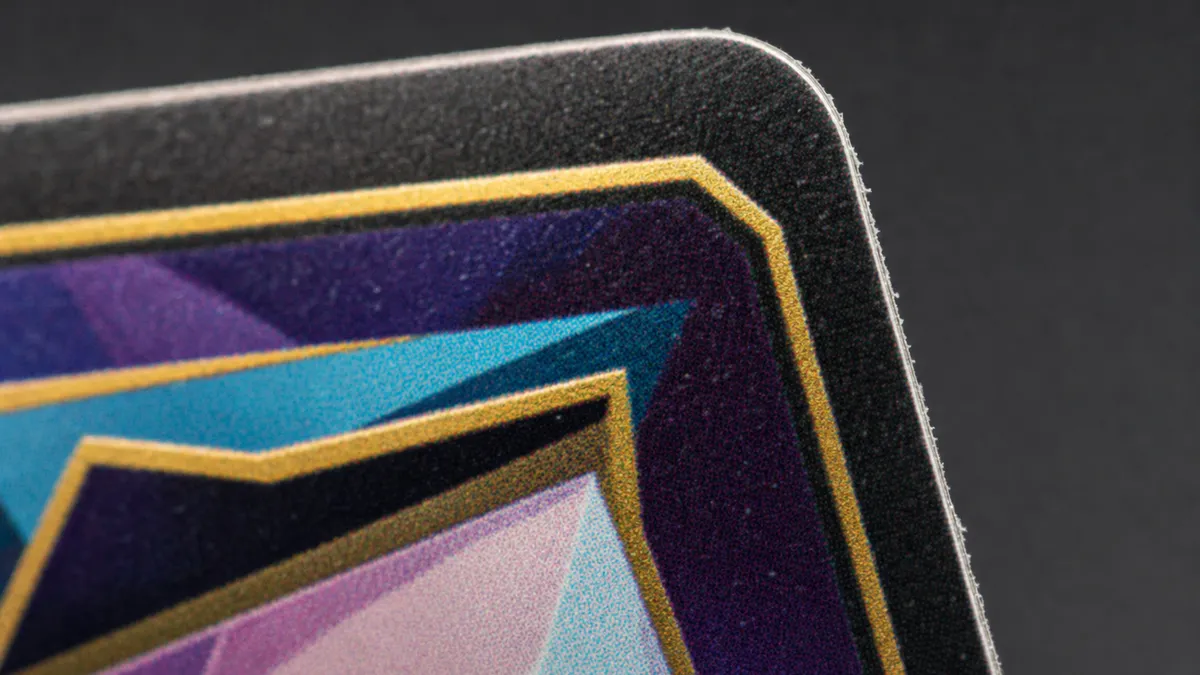 Replica
 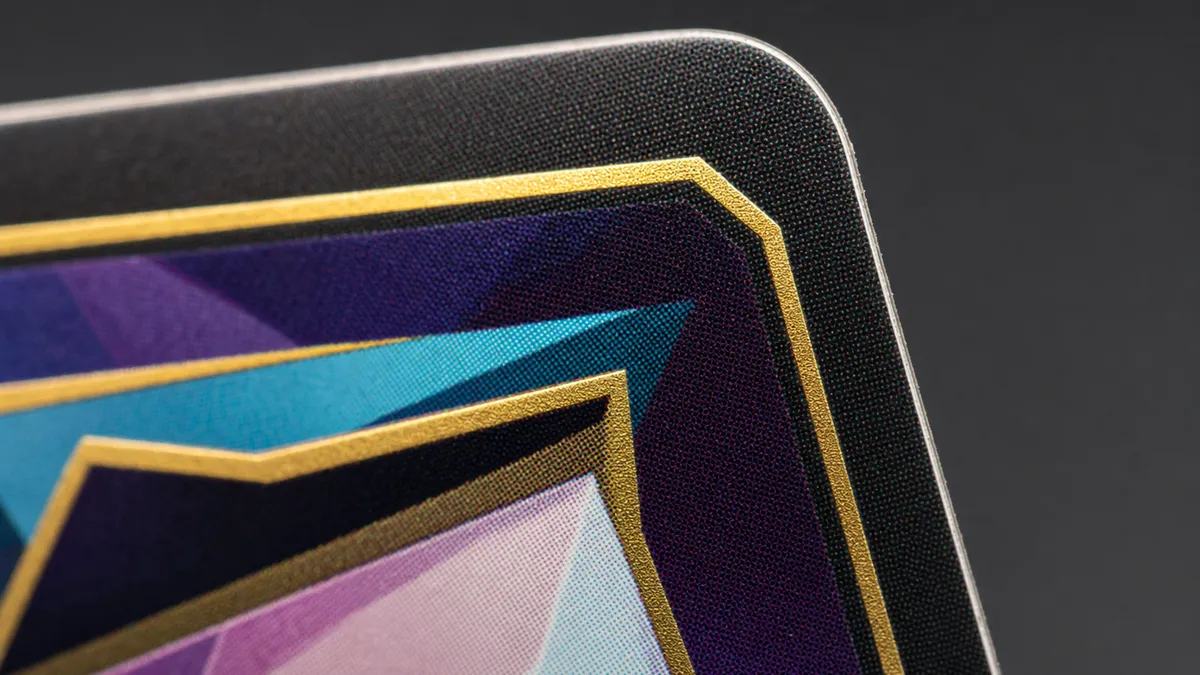 Authentic
 Photo angles for the check
- 1 Overall view
- 2 Logo / tag
- 3 Details & stitching
- 4 Material
Check your Black Lotus Beta right now
Snap photos of your item and get an AI verdict with a confidence score in about a minute.
FAQ
How do I quickly tell Beta from Alpha?
Look at the corners: Alpha are noticeably rounder, Beta are sharper. Both are black-bordered, so the corner radius is the main differentiator. Compare against reference photos of the correct set.
Beta vs Unlimited – what is the difference?
Beta is black-bordered, while a white (gray) border means Unlimited or a later printing (Revised onwards). A light border means it is not Beta. Border color is the first thing to check before corners and the rosette.
More Magic: The Gathering models
Other trading cards brands
Check another brand in this category: