Omega · Authentication
Seamaster 300M: real vs fake
The Seamaster 300M is Omega’s dive icon, recognizable by its wave dial and the helium escape valve at 10 o’clock. Replicas give themselves away with crude wave execution, a crooked valve and a weak Seahorse engraving on the solid caseback (references from 2018 have a sapphire back). Photograph the dial, valve and caseback and verify with LegitCheck AI.
What to check on the Seamaster 300M
Model-specific zones – on top of the brand-level signs.
Helium escape valve at 10 o’clock
Before 2018 the valve is a separate screw-down crown; from 2018 the Diver 300M valve is conical and does not unscrew. Check how cleanly the valve is integrated into the case rather than looking for threads and a screw-down action. A tilted or dummy valve is a clear replica tell.
Wave dial
The signature waves are engraved or stamped depending on the generation (1993–2018 references have a stamped pattern; from 2018 it is laser-engraved). The pattern is even, with consistent spacing and depth across the whole dial. On fakes the waves are uneven, "smeared," or look printed on top rather than in relief.
Caseback: Seahorse or sapphire
The Seahorse (Hippocampus) engraving belongs on solid Seamaster casebacks, including the 1993–2018 generations of the 300M. From 2018 the Diver 300M has a wave-edged sapphire caseback showing the caliber 8800/8806 – there is no seahorse on it. Check the caseback type against the reference, not against the line. Where the back is solid, the engraving is deep, with crisp lines and an even medallion outline; a small, flat or blurred seahorse is typical of copies.
Dial printing & markers
The "Seamaster", "Professional" and "300m / 1000ft" text is printed sharply, the applied markers and logo are straight, and the lume is filled densely in a single tone. Painted or misaligned text is a red flag.
Bezel and its action
The bezel is a unidirectional diver type, the insert sits coaxial with the case with no visible gap or misalignment, and the markings are even all the way around. Bidirectional rotation or a loose-fitting insert with a visible gap gives a replica away; click crispness and spring action are a hands-on check that doesn't affect a photo-based verdict.
Where to inspect
The key zones to photograph and check on this type of item – a schematic, not a product photo.
- 1Dial and printing
- 2Bezel and markings
- 3Crown
- 4Bracelet and links
- 5Serial and engraving
The difference is in the details – drag the slider
Typical differences in workmanship: stitching consistency, edge finishing, detail quality. Left – factory quality, right – common replica flaws.
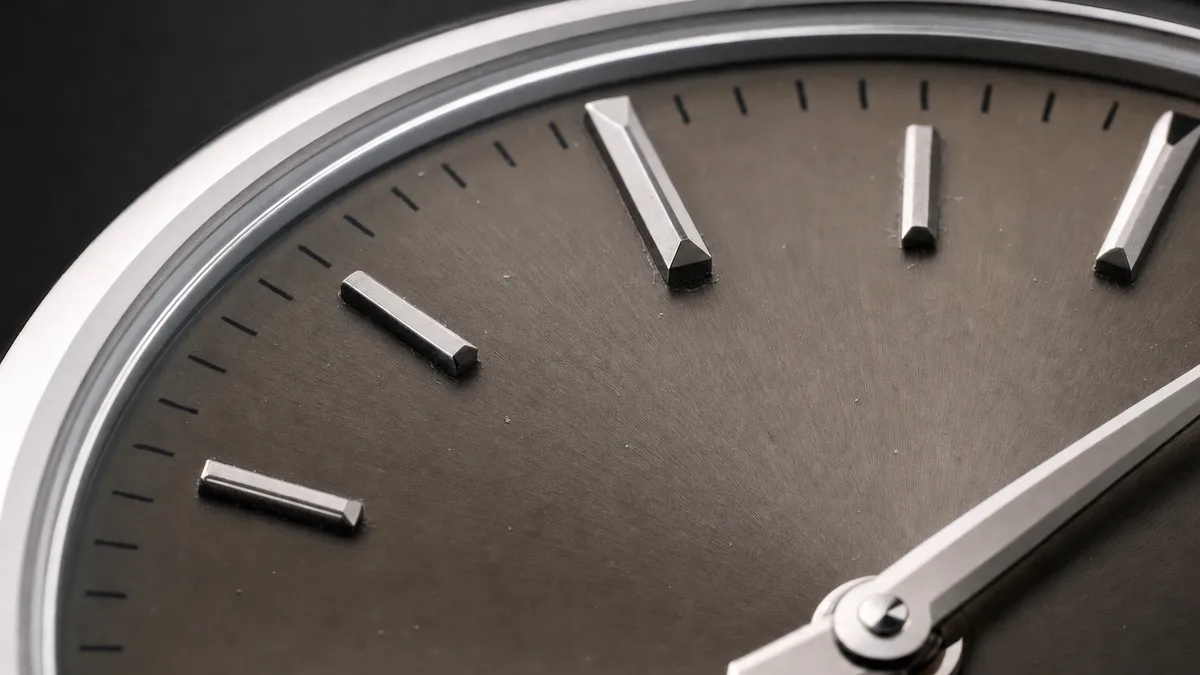 Replica
 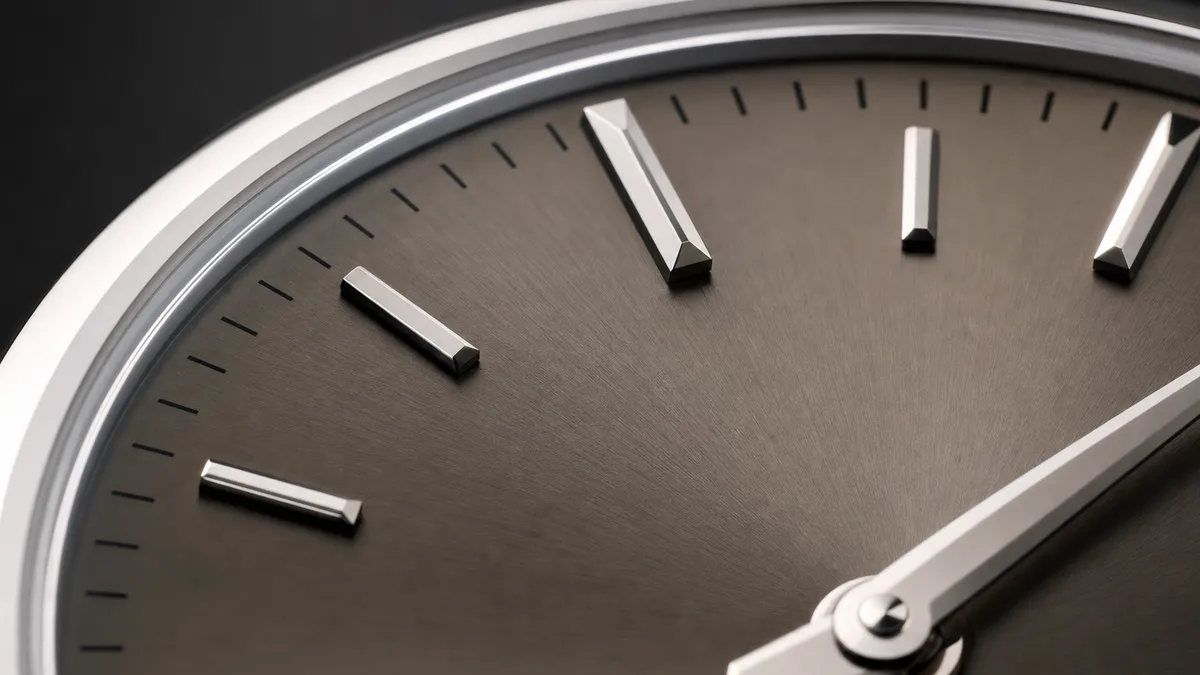 Authentic
 Photo angles for the check
- 1 Dial
- 2 Caseback
- 3 Crown
- 4 Bracelet
- 5 Serial number
Check your Seamaster 300M right now
Snap photos of your item and get an AI verdict with a confidence score in about a minute.
FAQ
Where is the helium escape valve on a Seamaster 300M?
On the side of the case at 10 o’clock. Before 2018 it is a separate screw-down crown; from 2018 it is a conical valve that does not unscrew, so the absence of threads and a screw-down action proves nothing on its own. Judge how cleanly it is integrated: a tilted or dummy valve is a serious reason to doubt authenticity.
What does a genuine wave dial look like?
The waves run in even rows with consistent spacing and depth across the dial; the technique depends on the generation – 1993–2018 references are stamped, from 2018 they are laser-engraved. An uneven, smeared or flatly "printed" pattern is a typical fake tell.
What should be engraved on the caseback?
On solid casebacks – including the 1993–2018 300M – Omega’s Seahorse (Hippocampus), deep and crisp. But from 2018 the Diver 300M has a wave-edged sapphire caseback showing the caliber 8800/8806, with no seahorse at all: check the caseback type against the reference, not against the line.
More Omega models
Other luxury watches brands
Check another brand in this category: